Paspébiac national historical site
- Museum
- History, archaeology and society
76, rue du Banc, Paspébiac (Québec), G0C 2K0
About the museum
Visiting the Paspébiac National Historic Site is more than a stroll among old buildings: it’s a walk in the footsteps of the fishermen, merchants and builders who brought this place to life. Discover the true story of the Robin and LeBoutillier empire, from great voyages to Europe and the West Indies to the hard reality of fishermen bound by debt.
A unique heritage!
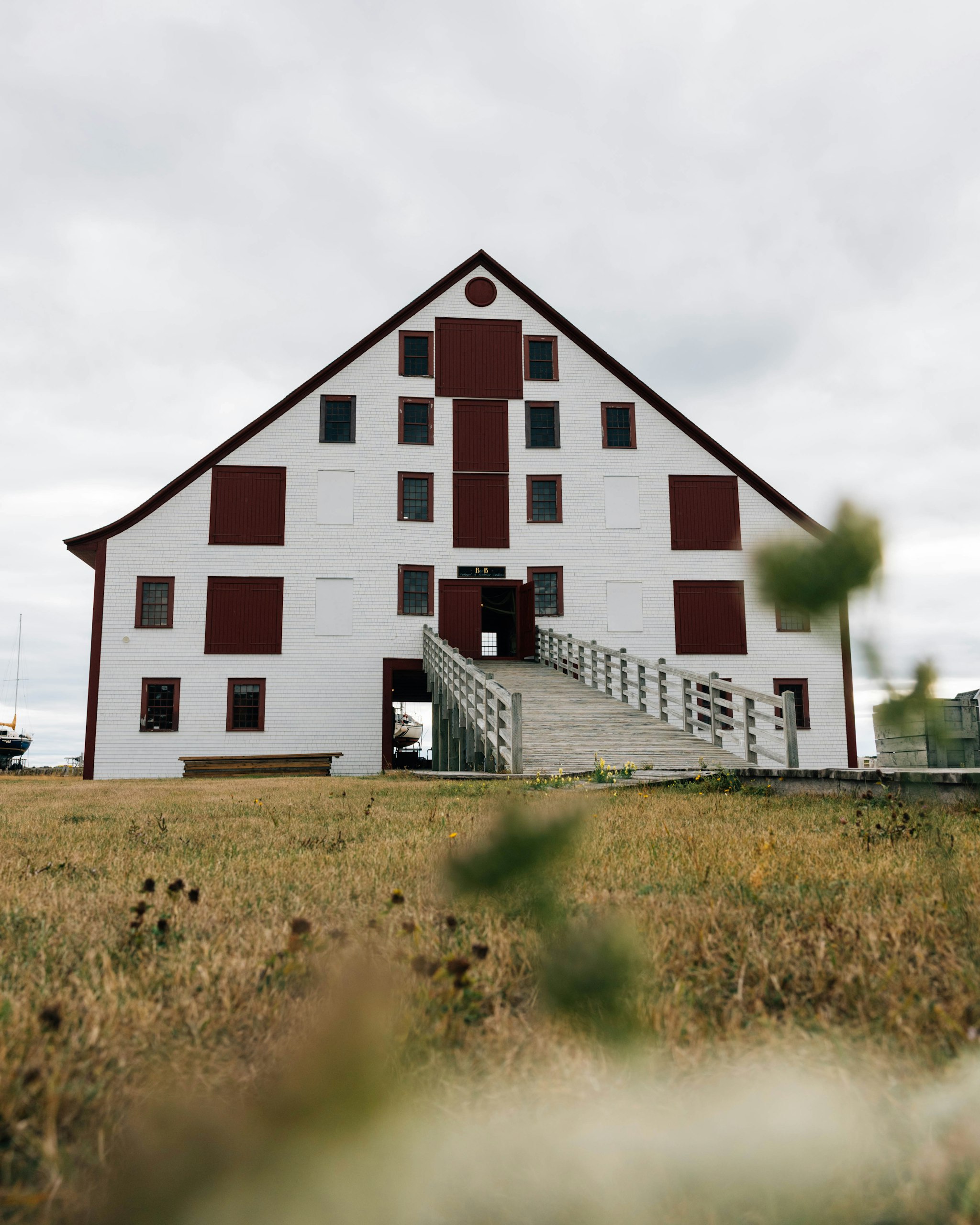
Where the Cod Built a World Long before the warehouses, there was the barachois: a strip of sand curling into the Baie des Chaleurs, where Indigenous peoples came for generations to fish. In 1766, a young merchant from the island of Jersey named Charles Robin saw something else in it: the perfect beach for drying cod. What he started here would ripple across the Atlantic. American privateers drove him away in 1778, but Robin returned in 1783, and Paspébiac became the heart of his trading empire. In 1838, the Le Boutillier Brothers, also from Jersey, set up next door. Together, the two companies turned this small Gaspé shore into one of the great dried-cod ports of the 19th century, sending ships loaded with salt fish to Europe, the Caribbean and as far as Brazil. For the families of Paspébiac, cod was everything: their work, their debts, their winters, their pride. Fishermen hauled it in, families salted and dried it on the flakes, carpenters built the boats, blacksmiths forged the nails. The companies shaped nearly every part of daily life, and for almost two centuries the whole coast moved to the rhythm of the fish. In 1964, fire swept through the banc and destroyed most of it. Eleven buildings survived. Among them stands the Le Boutillier warehouse, five storeys of wood rising over the shore and one of the largest fishing buildings ever built in North America. Today, those survivors tell the story, and so do the people. Many of our guides are Paspéyas whose own families worked in these same buildings. Visitors say what stays with them is not the dates but the encounters: a blacksmith taking the time to show how nails were made, a carpenter explaining how boats were built "back then," a guide who calls up a neighbour when a question stumps them. Here, history is told with warmth, a local accent, and often a good laugh. Come walk the banc. Step into the warehouses, breathe the salt air, linger on the beach, and listen. The great cod trade has faded, but in Paspébiac its story is still very much alive.
Useful links